Stellantis to Idle Windsor Assembly for Additional Weeks, Citing Tariffs and Softening Demand
Stellantis Canada will idle its Windsor Assembly Plant for several weeks this fall, the automaker said, blaming a combination of U.S. auto tariffs and weaker North American demand. The move deepens uncertainty for thousands of workers and intensifies pressure on Ottawa to protect domestic manufacturing.
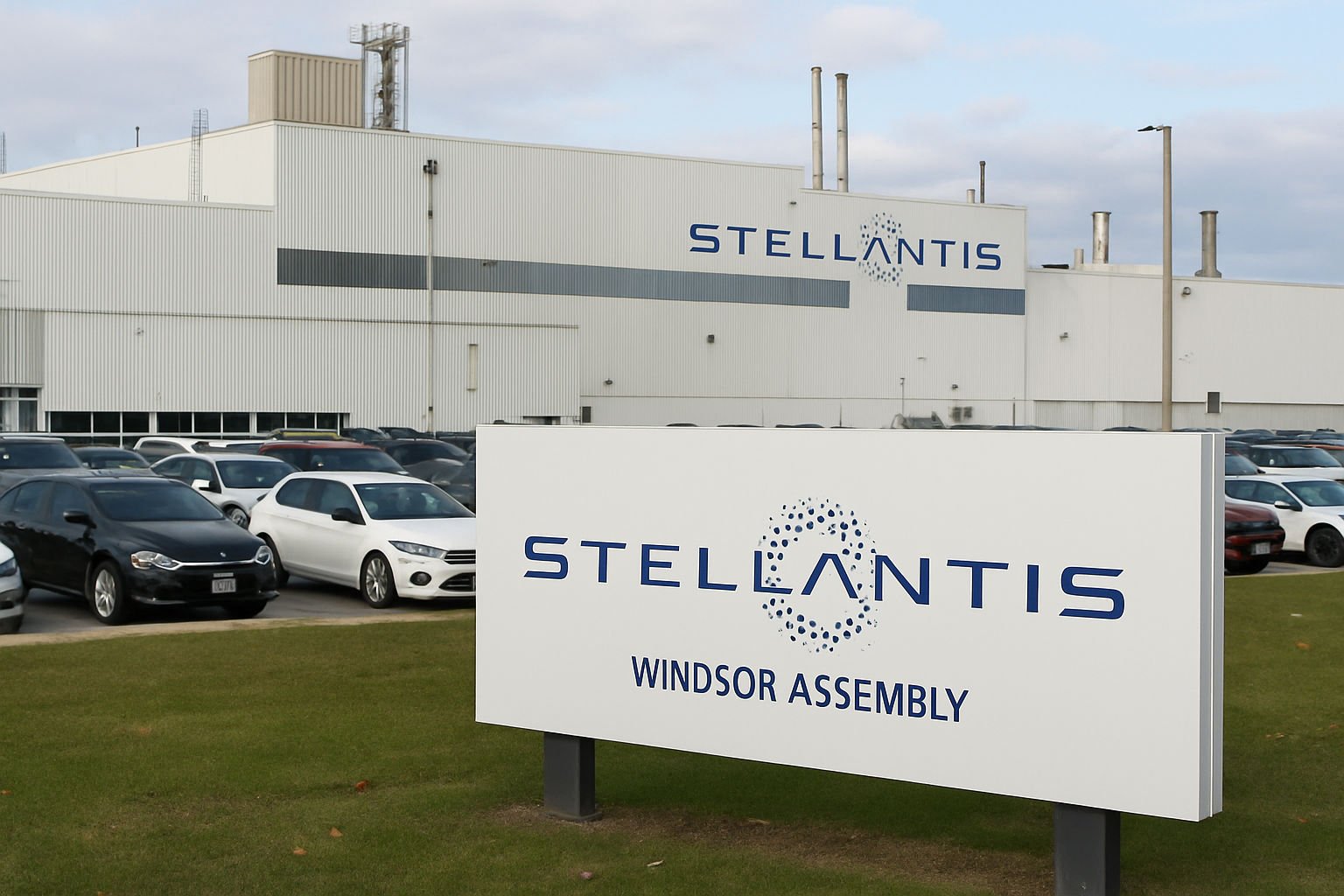
Stellantis Canada has announced that its Windsor Assembly Plant will be idled for multiple weeks this fall as the automaker adjusts production in response to trade and market pressures. The company told employees the plant will be down during two separate weeks in late October and additional dates into November, a decision Stellantis attributed to higher costs from U.S. tariffs and softer consumer demand across North America. The Windsor facility is a central employer in the city and a longstanding site for minivan and performance car production. Unifor, the union that represents assembly workers, said the fresh idling is a blow for members still recovering from earlier temporary shutdowns and elevated job insecurity across Stellantis operations in Canada. Why the shutdowns are happening Stellantis executives point to a combination of factors that has made short term production planning more volatile. Chief among those, the company says, are the tariffs imposed by the United States on certain imported vehicles and parts in recent months. Those levies have altered cross border economics for North American production, raising the landed cost of some models and prompting Stellantis to rebalance output between U.S. and Canadian facilities. At the same time, Stellantis cited weakening consumer demand for the vehicles produced at Windsor and broader inventory-management decisions that have encouraged temporary pauses. The company framed the idling as a measured operational response rather than a permanent closure, but it stressed that continued trade uncertainty and consumption trends will shape longer term manufacturing plans. Impact on workers and the community The Windsor Assembly Plant employs thousands of workers directly and supports many contractors and suppliers across Ontario. Temporary idling translates into periods when employees are moved to layoff status, often with government and employer income supports filling some of the gap for affected households. Unifor officials have publicly expressed concern that repeated shutdowns erode worker stability and complicate bargaining dynamics, particularly with a major collective agreement under negotiation in recent months. The union has pushed federal and provincial leaders to press Stellantis for a secure manufacturing future in Canada, pointing to past commitments the automaker made when government incentives and local investments were tied to plant modernizations. Government and political fallout The idling has already triggered responses across municipal, provincial and federal levels. Local elected officials in Windsor warned the schedule disruptions will ripple through the regional economy, affecting suppliers, parts distributors and service businesses that depend on steady plant operation. At the federal level, the development renews focus on trade policy and industrial strategy. Lawmakers and industry advocates are weighing whether existing protections and investment conditions are sufficient to anchor vehicle assembly in Canada when cross border tariffs change the calculus for multinational automakers. Some ministers and local politicians say they are engaging with Stellantis to seek assurances and explore options to mitigate the impact on workers. Wider implications for Canadas auto sector Automotive manufacturing in Canada operates within an integrated North American supply chain. When one major producer alters production timing or shifts some activity to U.S. plants, the effects extend through parts suppliers, logistics operations and local service industries. Analysts say the recent idling underscores how trade policy can quickly affect plant-level decisions, especially for products traded across the Canada United States border. The Windsor idling also raises questions about long term commitments by global automakers to Canadian facilities. Stellantis had pledged multibillion dollar investments in Canadian plants in prior years tied to electrification plans and battery production. Industry observers will be watching whether those capital plans remain intact, or how they might be reshaped if tariff and demand pressures persist. What to watch next Key things to monitor in the coming weeks include whether Stellantis announces additional downtime or a shift in where specific model production will be located within North America. Labour talks between the company and Unifor may intensify as the union seeks protections for members and clearer timelines for plant work. Federal and provincial engagement with Stellantis could produce new commitments or contingency support measures designed to preserve jobs and supplier relationships. For Windsor residents and Canada's auto supply chain, the near term remains uncertain. The company says the idling is temporary, but repeated production pauses have already tightened household budgets for affected employees and increased political scrutiny over how trade and industrial policy will support long term manufacturing jobs in Canada.
Topics
LocationWindsor Assembly Plant